Do you like beautiful colors?
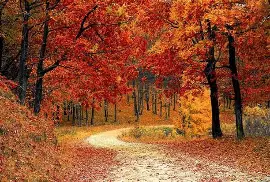
Do you like beautiful colors? Well … October is here, and leaves on trees begin their transformation of color this month. That’s why some people plan trips to the Great Smoky Mountains or to areas in the Northeast this time of the year. They want to see the beauty and majesty of the brilliant colors of the fall foliage firsthand. If you can’t make a trip this year, not to worry. Many of the beautiful colors can be seen on the trees in our area (e.g. Heuston Woods, Rush Run, Germantown Metro Park, Caesar Creek State Park, Fort Saint Clair Park).
There’s nothing like a leisurely drive through some of these areas, or walking one of the trails through a park, fishing in one of the lakes surrounded by trees, or just having a picnic among the beauty of nature.
You will see green, yellow, orange, red, purple, blue, brown, and mixtures of some of these colors. It’s like a Crayola box is opened and multiple colors are released!
Have you ever wondered why and how leaves change color? Well … it’s a lesson in weather, chemistry, and tree species. The abscission layer in between the leaf and branch stops transporting nutrients and water in early fall. This along with shorter days (less sunshine) and cooler nights, means less chlorophyll production (which created the green leaves by photosynthesis). This allows pigments of other colors to emerge. They are already in the leaves but now become more visible and prominent. They include: xanthophyll & flavone (yellow), carotene (orange/yellow), lycopene (orange/red), and anthocyanins (red, purple, blue).
Each of these pigments serve different purposes for the tree. Chlorophyll (green) is the primary photosynthetic pigment, making glucose used for food by the tree. Carotenoids (yellow, orange, red) which includes carotene, lycopene, and xanthophyll facilitate some photosynthesis and are photoprotective. Flavonoids (yellow, red, purple, blue) which includes flavone and anthocyanin help regulate plant development, repel and attract insects, protect against ultraviolet radiation, and herbivores.
The change in leaf color is part of senescence, the process of becoming old or aging prior to shedding of the leaves. During this color change, the tree reclaims valuable nutrients from the leaves. This process assists the tree in conserving energy to survive dormancy during winter. The leaves are severed in the abscission layer as enzymes break down the pectin (aka, glue) and as cells swell with water. Obviously, wind also assists the tree in shedding the leaves. You are then left with a leafless tree and a layer of leaves on your lawn.
This layer of leaves is rich with nutrients and organic matter that will release as they decompose. This assists in plant growth, soil health and the ecosystem at large. You can chop them up by mowing over them multiple times, place them in your vegetable garden spot, or place them around your plants.
We encourage you to take in the beauty of the color change in the leaves this fall. Greenbush is dedicated to “preserving trees in their natural beauty”. We want to assist you in keeping your trees healthy. If we can be of service, you can contact us at greenbushpros@gmail.com or 937-787-4490